
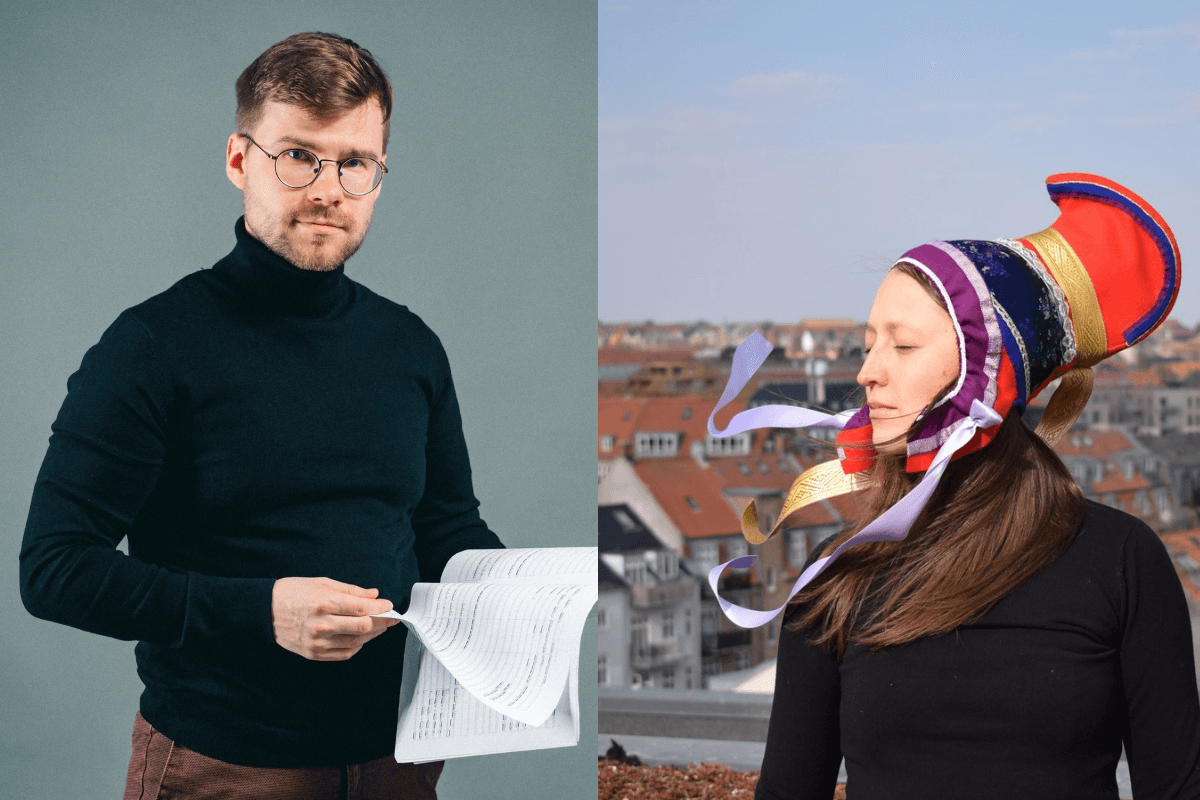
Lauri Marjakangas is a Finnish-Sámi composer, guitarist and producer from Oulu. His musical background covers jazz, folk music and contemporary concert music. His works have been performed by the Norwegian Arctic Philharmonic Orchestra, Tapiola Sinfonietta, defunensemble, Oulu Sinfonia and the Ostrobothnian Chamber Orchestra. Lauri is currently producing a two-year project “Arctic 3D Soundscape” for the New Music October (Nykymusiikkiseura Lokakuu) in Oulu that is part of the city’s Capital of Culture programme.
Marianne Sihvonen is a Finnish-Sámi flutist, improviser and composer dedicated to contemporary concert music. Her work unites traditional and contemporary forms of expression, with the focus on cultural and ecological sustainability and community. Marianne lives in Copenhagen and has performed extensively around the world. In the coming season, she will perform at festivals including Insomnia, Warsaw Autumn and VocalEspoo, and will premiere a work commissioned by Tromsø Contemporary Art Center together with yoiker and composer Johan Sara.
The two creators first properly met about a year ago at the Young Nordic Music UNM Finland (Ung Nordisk Music) Festival.
”My interest in working with Lauri rose from our similar backgrounds. It is difficult to find a creator in Finland who understands my history without explanations”, says Marianne. Lauri fully agrees and emphasises the importance of not having to clarify why certain themes stir up specific feelings.
”It makes things more straightforward and lighter, in a way it creates a feeling that we are on the same wavelength on the important issues. In art, it is crucial to have that shared understanding. When you work with people who do not share that understanding, an invisible wall can rise between you.”
“When you work with people who do not share that understanding, an invisible wall can rise between you.”
Lauri approaches the subject of creatorship and making new music from the perspective of artificial intelligence.
”One positive thing about AI is that it cannot replace human interaction. AI’s ability to generate musical results in the blink of an eye highlights the fact that in making music not just the end result matters. The process and human interaction in particular are vital. Interaction in itself has value, there is no need to replace that. An essential part of the process is how both individual and collective thinking evolves through interaction and collaboration.”
Marianne began her career as a performer. Over time, however, she started to wonder if being an orchestra musician really was her path. At the same time, ideas for music began bubbling to the surface. Collaboration is an important part of her process.
“Working with composers or other performer-composers is what creates the interest, for me it is the exchange of ideas. It can completely transform your own life, how someone else sees an instrument or music. Also, being able to create something entirely from scratch is incredibly productive and fascinating.”
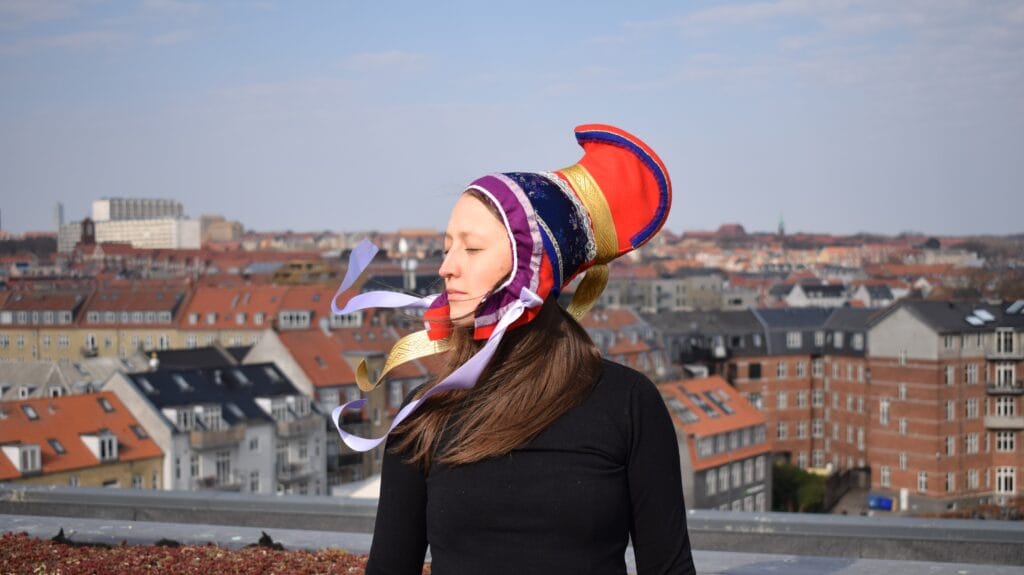
The composers are currently inspired by sound and finding a sense of peace in the creative process.
“I am really interested in exploring how to combine the flute with pedals because of the sound world and their limitations,” Marianne explains. Lauri, meanwhile, is fascinated by modular synthesizers in which you can “sink your money and your life into”, he jokes. Marjakangas is accustomed to working with acoustic ensembles and instrumentalists as well as with music technology. “I try to explore different areas of music, and if I come across interesting sounds, harmonies or strange rhythms, I always start wondering if they might contain the ingredients for some kind of compositional adventure.”
For Marianne stories, what they bring to the creative process, and improvisation are closely connected. She also considers the sense of safety essential
“The more I compose, the more interested I become in finding peace of mind within improvisation. Sometimes you reach this moment where everything feels right, and then suddenly ideas emerge that have never occurred to you before. That is what safety and having enough time can give to you.”
“Sometimes you reach this moment where everything feels right, and then suddenly ideas emerge that have never occurred to you before. That is what safety and having enough time can give to you.”
Marjakangas and Sihvonen were awarded a €8,000 grant from the Teosto Cultural Foundation for creative work and travel expenses related to Kieláin – Gielain. The 30-minute work for flute and live electronics explores language and the loss of it.
“We have both lost a language and are now reclaiming it, although in different ways and to different degrees. We have different stories, and that has been a source of inspiration,” Marianne explains.
The work is not intended to provide ready-made answers or explain anything. Instead, it aims to give audiences space to experience the work on their own terms. Whether through their own family background, an interest in the subject matter, or simply through the composition itself and its technical realisation.
“The aim is not to create a work that everyone understands or can approach on a personal level. People can simply enjoy the music and how it affects them,” Marianne says.
Lauri adds that there will certainly be things that listeners may not fully understand, but with empathy you can still connect with the emotion we try to share. “The resulting sound will probably be quite rough, even overwhelming. It will definitely be some sort of personal emotional outpouring, like what kind of gut feeling can you turn into music. Not in a way that makes your ears hurt, but it might hurt in another way.”
The complete work will be performed in Oulu at the New Music October (Uuden Musiikin Lokakuu) contemporary concert music event in autumn 2027. The work will be performed under a sound dome, a large arched structure. The audience will experience the work through a high-quality multichannel sound system surrounding them. The work is still taking shape, and many practical questions remain open. The composers hope to perform the work also elsewhere but the 50-person electronic music concert space used in Oulu will not necessarily be available everywhere.
“It is a question of what to prioritise: composing specifically for the dome, or creating a reduced version for a tour. Up north, for example, they may not have the technology available. It is a bit like composing for a symphony orchestra and then being given 15 musicians,” Marjakangas reflects.
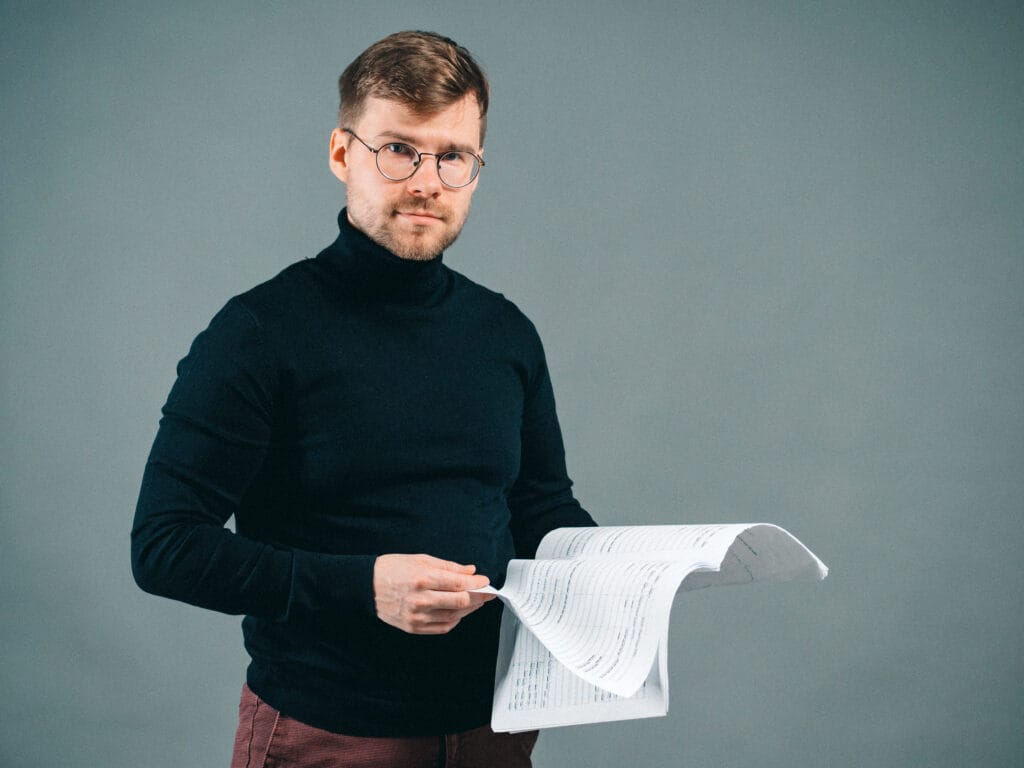
Since both artists are involved in numerous projects of their own, finding peace of mind for this work is important. Lauri explains that although it is possible to learn new techniques and compose new works in the middle of a busy everyday life, deeper immersion in the subject requires time and space.
“Thinking deeply about the content and themes requires that there is nothing else in your calendar. You need to be able to sit with your thoughts and stay in the moments without feeling the need to immediately get somewhere in the thinking process. Something can start to emerge from within you without having to explain your existence or justify it. This is what a grant makes possible.”
“You need to be able to sit with your thoughts and stay in the moments without feeling the need to immediately get somewhere in the thinking process.”
Marianne again emphasises the importance of creating a safe space for herself. The grant provides very concrete room for creating, for example, by allowing her to reduce her teaching commitments and focus on composing.
“Receiving the grant creates a sense of belief in your own work, that what I have done and what I am doing is not completely pointless, that there is a place and a need for it in society. It encourages you to keep going on, and gives the feeling that you are moving in the right direction.”
A warm thank you to Lauri and Marianne for the interview!
The composing and performances of Kieláin – Gielain are also supported by the Arts Promotion Centre Finland (Taike), the Music Promotion Foundation (MES) and Oulun Valistustalo.
Find out more about Lauri and Marianne’s work:
www.laurimarjakangasmusic.com
www.mariannesihvonen.com